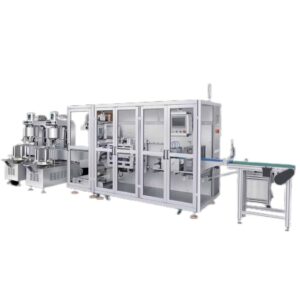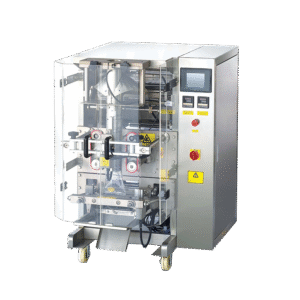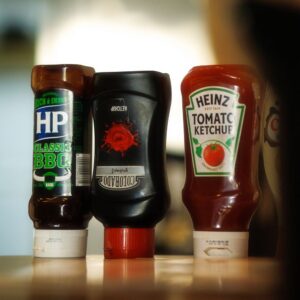
En kapsylmaskin drar åt eller förseglar en kapsyl på en fylld behållare, och det är själva kapsylen som avgör vilken maskin som ska användas. De fyra viktiga typerna är halvautomatiska chuckkapsylmaskiner, inline-spindelkapsylmaskiner, roterande chuckkapsylmaskiner och ROPP-kapsylmaskiner. Chuck- och spindelmachiner drar åt skruvlock med gängor; ROPP-maskiner rullar fast aluminiumlock på flaskhalsar för vin, sprit och läkemedel. Välj typ utifrån ditt lock, din hastighet och dina vridmomentkrav, i den ordningen.
Viktiga punkter:
- Kåpan avgör vilken kåpare som ska användas. Skruvlock av plast: chuck eller spindel. Roll-on-förpackning av aluminium: ROPP. Sportlock eller doseringsförslutning: chuck med specialverktyg. Välj först efter förslutningstyp, sedan efter hastighet.
- Vridmomentet är den viktigaste prestandaparametern. Ett lock som dras åt med rätt vridmoment tätar och återtätar; för lågt vridmoment leder till läckage under transport, medan för högt vridmoment sliter sönder gängorna och irriterar kunderna.
- Halvautomatiska kapsylförslutare är avsedda för små volymer. Upp till cirka 15 flaskor per minut med en operatör, för 2 000–8 000 dollar.
- Inline-spindelförslutare är riktiga arbetshästar. De hanterar 20–200 flaskor per minut i en kontinuerlig linje tillsammans med er påfyllningsmaskin och klarar det bredaste utbudet av skruvkorkar.
- ROPP är en egen disciplin. Aluminiumlock, gängrullning och skårning av broar för manipuleringsskydd: specialmaskin, förbättrad hygiendokumentation, alternativ av läkemedelskvalitet.
- Testa med dina egna flaskor och lock. Toleransen för stängning varierar mer mellan olika leverantörer av lock än mellan olika maskinleverantörer. Detta upptäcks vid provkörningar.
De fyra typerna av förslutningsmaskiner i korthet
| Typ | Så här fungerar det | Bäst för | Realistisk hastighet | Riktprisintervall |
|---|---|---|---|---|
| Halvautomatisk chuck | Operatören sätter på locket; chucken sänks ned och åtdrivs | Nystartade företag, 500–3 000 flaskor per dag | 10–20/min | 2 000–8 000 dollar |
| Inbyggd spindel | Flaskorna passerar roterande spindelhjul som vrider locken nedåt | Skruvkorkar, produktionslinjer med medelhög hastighet | 20–200/min | 10 000–40 000 dollar |
| Rotationschuck | Flaskindex vid vridmomentstyrda spännhylsor | Hög hastighet, exakt vridmoment, snygga förslutningar | 100–400/min | 40 000–150 000 dollar |
| ROPP | Rullarna skruvar fast aluminiumkåpan på ytbehandlingen och förbinder den | Vin, sprit, läkemedel, olivolja | 30–300/min | 15 000–80 000 dollar |
Halvautomatiska kapsylförslutare: En bra startpunkt
Operatören sätter på ett lock på flaskan, placerar flaskan under förslutningsmaskinen (eller skjuter in den i ett fäste) och trycker på en pedal eller knapp. En spännhållare sänks ned, griper tag i locket och drar åt det med ett förinställt vridmoment eller under en viss tid. Vissa modeller kräver att flaskan hålls fast för hand; bättre modeller griper tag i flaskan automatiskt så att båda händerna är fria för att sätta på locket.
Varför börja här: minimalt kapitalbehov, inga reservdelar utöver chuckinsatser, och den tillämpar ett mer jämnt vridmoment än en människa med en momentnyckel. För kontraktsförpackare som hanterar små partier av många olika produkter kan en halvautomatisk chuckförslutare hantera dussintals olika lockmodeller.
Begränsningar: En operatör motsvarar en maskin. Vid en produktionstakt på ungefär 15 flaskor per minut eller mer än ett operatörsskift bör man övergå till inline-produktion.
Det finns två typer av chuckdrivningar. Chuckar med magnetkoppling slirar vid ett förinställt mekaniskt vridmoment: de är enkla, lätta att underhålla och tillräckligt tillförlitliga för de flesta uppgifter inom livsmedels- och hushållsindustrin. Servochuckar mäter och registrerar det tillförda vridmomentet elektroniskt: detta lönar sig när revisioner kräver dokumentation eller när dina förslutningar är dyra. Oavsett vilket alternativ du väljer, se till att välja en modell som griper tag i flaskan, inte bara i locket; en behållare som snurrar fritt förvränger vridmomentavläsningarna och glider över fixturen.
För växande produktlinjer för flytande produkter är kapsylmaskinen vanligtvis det andra automatiseringssteget efter påfyllningsmaskinen. Om ni planerar hela produktlinjen för flytande produkter samtidigt, är vår liquid packaging solution page lays out how filling, capping, and labeling stages connect.
Inline Spindle Cappers: The Workhorse
Bottles travel single file through the capper on a conveyor, holding their necks between side belts. Caps drop from a chute (or a vibratory bowl, or a pick-and-place placer) onto the passing bottles. Then a row of paired rotating spindles, each set slightly closer to the bottle centerline, spins the caps down progressively until the final pair tightens to running torque.
Why it dominates: continuous inline flow matches filler output, one machine covers a wide cap diameter range (typically 10–110 mm with guide adjustments), and cap style changes are quick guide and spindle swaps. Add features as budget allows:
- Cap elevator and sorter (bowl or elevator with a chute)
- Pick-and-place capping for difficult caps (sport caps, flip-tops) that will not self-orient in a chute
- Torque control by clutch or servo, with drift alarms
- No-cap-no-run sensors to stop the line when caps run out
Where it struggles: very precise torque requirements (pharma validation) and very high speeds. Both point toward rotary chuck.
Rotary Chuck Cappers for High-Speed Precision
A rotary capper indexes bottles around a carousel under a series of capping heads. Each head picks a cap, descends onto the bottle, and applies a programmed torque: clutch-based or servo-controlled. The torque per head is set and monitored, which is why rotary chuck machines own the high-speed end and the validated industries.
Choose rotary when:
- Speed exceeds what an inline spindle can hold (roughly 200+ per minute)
- The closure is expensive or tricky (dispensing closures, child-resistant caps) and needs positive pick control
- You must document applied torque for audits (food safety plans, pharma GMP)
The tradeoffs: significantly higher capital, more change parts per cap format, and a bigger footprint. Rotary cappers are usually specified as part of a monoblock or rotary line design rather than bought standalone.
ROPP Capping for Aluminum Caps
ROPP (Roll-On Pilfer-Proof) machines seal aluminum caps onto bottles by rolling the cap skirt into the bottle’s threads. The rollers form the thread into the soft aluminum and press a bridge score so the cap breaks visibly on first opening: tamper evidence built into the closure.
Typical ROPP products: wine, spirits, olive oil, juice in glass, and pharmaceutical bottles. The machine looks like a compact rotary capper with roller heads instead of torque chucks.
What to know before buying:
- Head count sets speed. 4-head entry machines run 30–60 bottles per minute; 8–12 head machines reach several hundred.
- Bottle and cap tolerances are unforgiving. Glass finish quality and cap alloy both affect sealing; specify caps from a closure supplier the machine maker has run.
- Options that matter in pharma: cap presence detection, rejected-bottle diversion, and validation documentation packages.
Torque: The One Spec That Decides Leak or Seal
Applied torque is the rotational force with which the cap is tightened, usually quoted in inch-pounds (in-lb) or newton-meters (Nm). Every cap supplier publishes a target removal and application torque band for each closure.
Commonly used starting bands (confirm with your closure supplier):
| Container | Typical application torque band |
|---|---|
| Small PET bottles, 28 mm PCO caps | 12–18 in-lb (1.4–2.0 Nm) |
| HDPE bottles, 38–48 mm caps | 20–30 in-lb (2.3–3.4 Nm) |
| Glass with aluminum ROPP | Thread-rolling (roller pressure), not torque-driven |
Three failure modes come from ignoring this:
- Under-torque: leaks in transit, evaporation, tamper risk
- Over-torque: thread skipping or stripping, crushed liners, closures elderly customers cannot open
- Uneven torque across the batch: the quiet killer, because average torque looks fine while the tail of the distribution leaks. This is why torque monitoring (or at least periodic hand-torque audits) belongs in your line discipline.
Make the audit a shift habit: five bottles on a hand torque tester at shift start and after any format change, readings logged against the closure supplier’s band. It costs two minutes and catches drift before a pallet of loose caps ships instead of after a customer complaint.
Matching the Capper to Your Cap and Bottle
Before you ask a supplier for a machine, write down:
- Cap style and diameter range (every closure you run now or plan to)
- Bottle neck finish (GPI/SPI finish spec, e.g. 28-410) and bottle material
- Speed required from the filler, with 10–15% headroom
- Torque documentation needs (audits or not)
- Line layout: inline between filler and labeler, or rotary monoblock
Suppliers quote against that list in a day; without it, quotes are guesses. For the filling side of the same line, our bottle filling machines overview covers the filler options that pair with each capping tier.
Capping Machine Prices: What to Budget
| Tier | Riktprisintervall |
|---|---|
| Handheld torque tool with stand | $200–$800 |
| Semi-automatic chuck capper | 2 000–8 000 dollar |
| Inline spindle capper with cap sorter | 10 000–40 000 dollar |
| Inline with pick-and-place and servo torque | $30,000–$60,000 |
| Rotary chuck capper | 40 000–150 000 dollar |
| ROPP capper (4–6 head) | $15,000–$50,000 |
| ROPP high-speed / pharma documented | $50,000–$80,000+ |
Alla priser i denna guide är vägledande uppskattningar för budgetering, baserade på marknadsobservationer. Kontrollera aktuella priser med leverantörerna för just din konfiguration.
Chuck inserts and change parts per cap format typically add $200–$1,000 per size. Budget them when you budget the machine, not as a surprise.
Capping on Pouches: Spouts and Caps
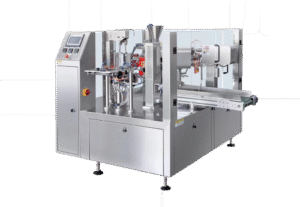
Rigid bottles are not the only things that get caps. Spouted pouches (juice, sauce, detergent refills) seal with a spout and screw cap, and the capping step runs on the pouch machine’s spout capping station or a rotary capper integrated after filling.
The photo below shows the premade pouch machine family that carries these spout-capping stations.
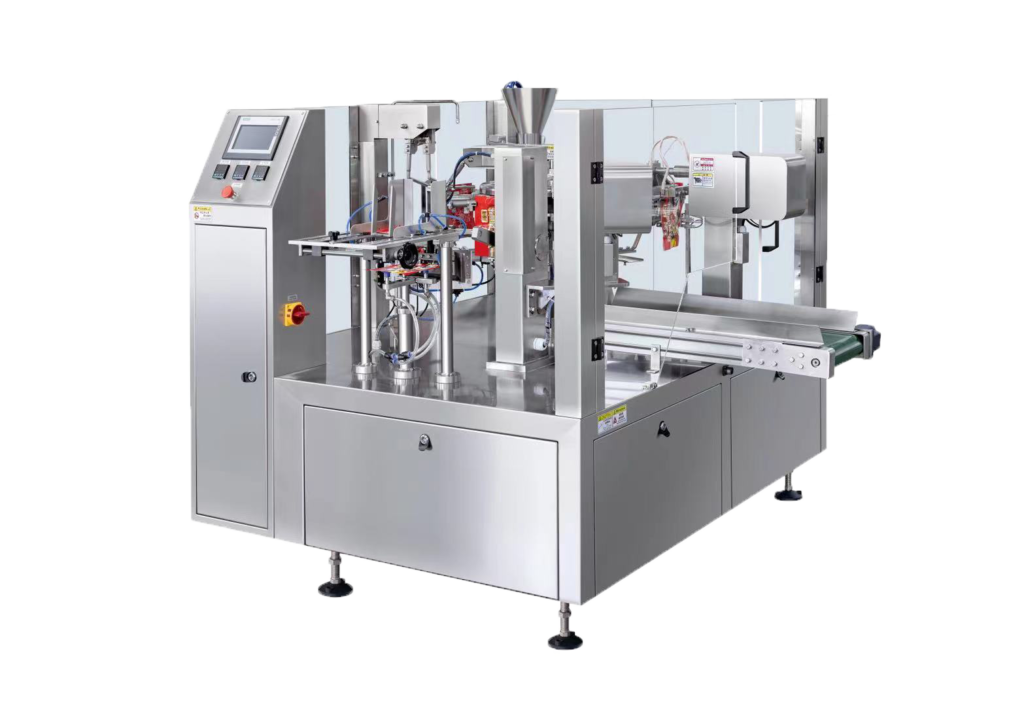
If your product roadmap includes both bottles and spouted pouches, say so early in the capper conversation: cap handling and torque control carry over, but the machine architectures differ.
Vanliga frågor
Can one capping machine handle different cap sizes?
Within a range, yes. Inline spindle cappers adjust across roughly 10–110 mm cap diameters with guide and spindle changes; semi-automatic chucks swap chuck inserts. Each format still needs its correct torque setting, so lock recipes per product, not per operator.
What is the difference between chuck and spindle capping?
A chuck capper grips the cap positively and applies controlled torque directly: precise, ideal for tricky or expensive closures. A spindle capper spins the cap with friction wheels as the bottle passes: continuous, fast, and simpler, but torque control is less absolute.
How do I check capping quality on the line?
Two habits: a torque tester on sampled bottles every 30–60 minutes (log the readings), and periodic inversion or squeeze tests for leak paths. If your capper has servo torque monitoring, trend the data instead of sampling it.
Do I need a cap sorter or elevator?
Above roughly 40 bottles per minute, hand-loading cap chutes becomes the bottleneck; add a vibratory bowl or cap elevator then. Below that, a chute you fill by the bag works fine.
Why is my caps’ torque inconsistent even with a good machine?
Usually the closures, not the capper: cap diameter tolerance, liner variation, and dust on threads all move torque. Test a lot from your cap supplier before blaming the machine, and keep caps clean and dry in storage.
Should capping speed match filling speed exactly?
No: cap the filler rate plus 10–15% headroom. The capper is cheap to oversize and expensive to undersize, because it becomes the line bottleneck the day your filler speeds up. For a sizing check across your products, kontakta oss with bottle, cap, and target speed details.