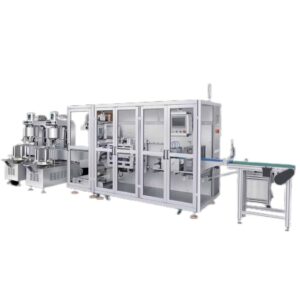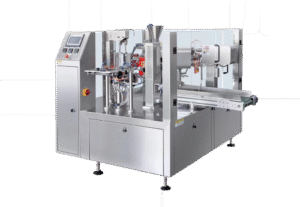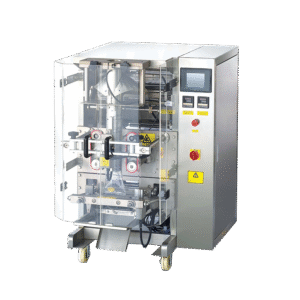
A cartoning machine erects a folded carton blank, inserts your product, and closes the flaps, all automatically. The horizontal vs vertical question comes down to how the product enters the carton: horizontal cartoners push it in from the side, and suit products that hold their shape, like flow-wrapped bars, pouches, and trays. Vertical cartoners drop it in from above, and suit products that settle, flow, or are fed loosely, like bags of rice, granules, and powdered sachets. Choose by product behavior first; speed and price only settle the details after that.
Puntos clave:
- Horizontal = side push. Solid, self-supporting products: wrapped bars, stick packs grouped, sachet multipacks, bottles, tubes.
- Vertical = top drop. Flexible products and anything gravity feeds better than a pusher can handle: pillow bags, bulk-filled pouches, loose-wrapped items.
- The carton blank is the same. Both styles erect glued or tuck cartons from a magazine; what differs is the loading axis.
- Intermittent vs continuous motion is the second decision: intermittent is cheaper and easier to service, continuous doubles the top speed for long runs.
- Closing method matters. Tuck closure changes over clean and needs no glue system; hot-melt or glue closing runs faster and seals dustier cartons.
- Feed the cartoner well. Product infeed (grouping, collation, orientation) is the hardest part of most cartoning projects.
What a Cartoning Machine Does
Every cartoner runs the same core sequence, whatever the axis:
- Blank magazine. Stacks of flat, pre-scored carton blanks load into a magazine.
- Erection. A picker pulls the top blank, opens it into a square tube, and seats it in a moving chain of clamps (the carton chain).
- Loading. The product enters: pushed horizontally, or dropped vertically.
- Closing. Flaps fold and close, either tuck-in (minor and major flaps tuck into each other) or adhesive (hot-melt glue or cold glue on the seams).
- Discharge. The closed carton exits to a case packer, checkweigher, or conveyors.
The heart of the machine is the carton chain: an endless chain of clamps that carries each erected carton from station to station at a fixed pitch. The pitch sets the carton size envelope, which is why format changes sometimes mean chain swaps, not just guide adjustments. Ask any supplier to state which parts change per format (chain, pushers, folders, tuckers) and which stay; that parts list, more than the brochure speed, defines your real changeover life with the machine.
Carton sizes change by recipe: servo machines recall a stored recipe and run a new blank in minutes; mechanical machines need hand adjustments per format.
Horizontal Cartoners: Push It In From the Side
In a horizontal cartoner, erected cartons travel on their side with the open end facing the product infeed. A pusher (or a flighted infeed synchronized to the carton chain) shoves the product into the open carton at the loading station, then the end flaps close behind it.
Products that run horizontally:
- Flow-wrapped bakery bars, chocolate tablets, energy bars
- Grouped stick packs and sachets (collated into a stack or row first)
- Rigid pouches, doypacks standing on their base
- Tubes, bottles, vials in trayless cartons
- Pharmaceutical blisters with leaflets (the classic pharma horizontal application)
What horizontal gives you: gentle, controlled insertion; exact product placement (important when a leaflet or blister must sit a certain way); and the widest range of product types in one machine.
What it costs you: the machine needs the product to arrive collated and oriented, so infeed grouping conveyors or bucket conveyors become part of the project. Soft, air-filled bags are horizontal’s weak point: they squirm under the pusher.
Vertical Cartoners: Drop It In From Above
A vertical cartoner erects the carton standing upright, open top facing up. Product drops or is placed in from above, then the top flaps close. Feeding can be gravity (a simple chute), a drop collator over the passing carton, or a pick-and-place head for delicate items.
Products that run vertically:
- Pillow bags and other flexible bags (rice, snacks, coffee, pet food)
- Products that flow or settle (no pusher can handle them)
- Tall, narrow cartons where a horizontal push would tip the product
- Products where weight in the carton base actually helps stability
What vertical gives you: simplicity on flexible products, gravity does the loading; compact footprints (the machine is tall, not long); and better carton squareness with heavy contents. Bag feeding into vertical machines has its own toolbox: bag flatteners, bag turners (rotating a lying bag upright as the carton passes), and drop collectors that stage a group of bags over the moving carton and release them together. A product that arrives consistent and square at the carton top runs far faster than the machine’s rated maximum, so specify the bag handling as deliberately as the cartoner itself.
What it costs you: speed ceiling is lower than horizontal in most classes, and multi-product collation (several different items in one carton) is harder to arrange vertically.
Horizontal vs Vertical: The Decision Table
| Factor | Horizontal cartoner | Vertical cartoner |
|---|---|---|
| Loading method | Side push, synchronized | Top drop, gravity or placer |
| Best product | Self-supporting, collated | Flexible bags, settling product |
| Typical speed | 60–300 cartons/min | 30–150 cartons/min |
| Footprint shape | Long and low | Compact and tall |
| Multi-item kits | Straightforward (push a group) | Harder to arrange |
| Leaflet insertion | Standard option | Less common |
| Indicative capex | $30,000–$250,000 | $25,000–$100,000 |
One machine family sits between them: wraparound case packers fold a flat blank around a pre-collated product block (common in beverage and canning). If your real question is shipping cases rather than retail cartons, look there.
Intermittent vs Continuous Motion
The second big fork, mostly in horizontal machines:
- Intermittent motion: the carton chain stops at each station (erect, load, close). Simpler mechanics, easier access for format changes and jams, lower price. Typical ceiling 100–150 cartons per minute.
- Continuous motion: everything happens on the fly with no stops. Doubles or triples the top speed (200–400+ cartons per minute), at higher capital and tighter maintenance skills.
Rule of thumb: one long run of one product justifies continuous; many SKUs and frequent changeovers reward intermittent, because stopped-machine access makes clearing misfeeds and changing formats faster than the brochure speed difference ever will.
What Runs Into Cartons: The Feed Side
A cartoner is only as good as what feeds it. Classic feeding setups:
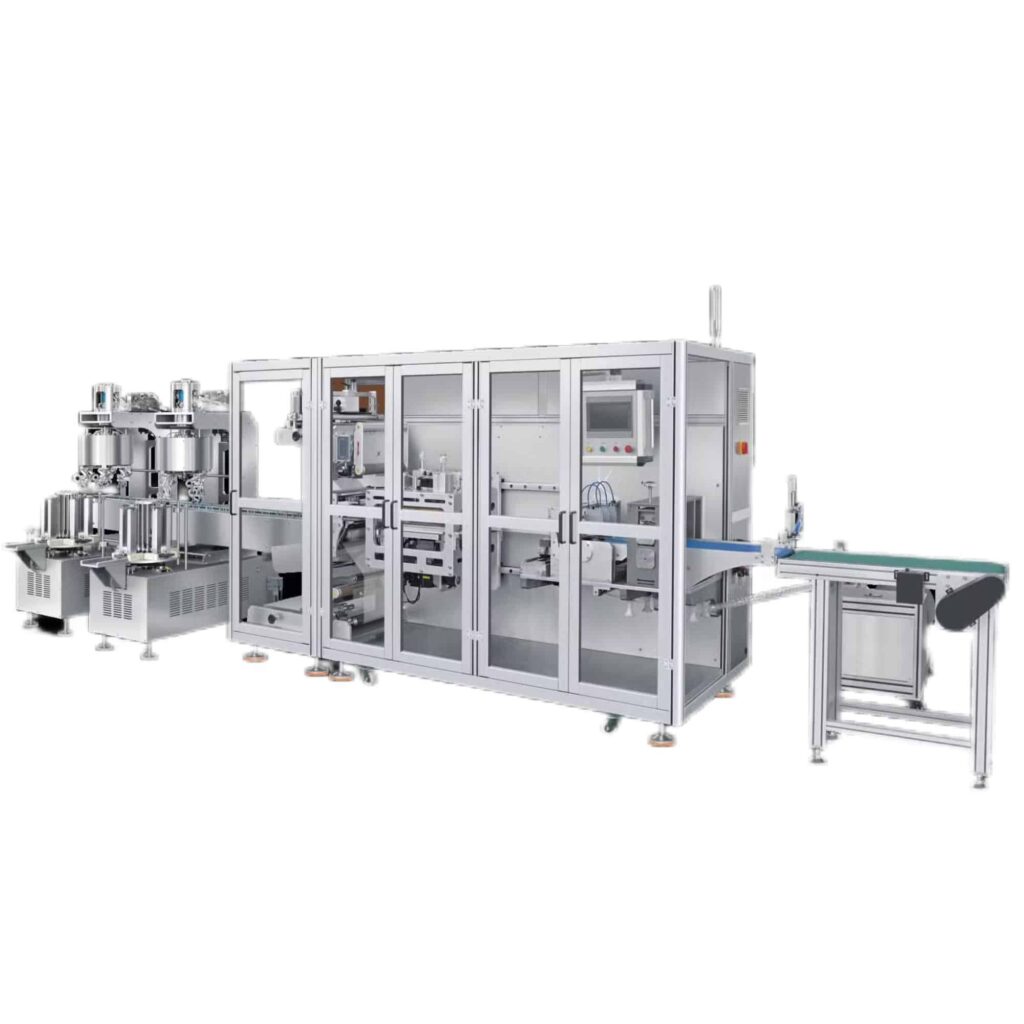
- Flow-wrapped products: bars and cookies arrive from the wrapper and need lane grouping and stacking before the pusher. The photo below shows the wrapper side: a flow packing machine producing the wrapped primary packs that cartoners later collate.
- VFFS and pouch bags in vertical cartoners feed by gravity chute or bag turners.
- Pharma blisters feed from blister lines with leaflet fold-and-insert units.
When you budget a cartoning project, budget the collation conveyor as a named line item. Under-specifying infeed is the most common cause of a cartoner that never reaches rated speed.
Carton Blanks: The Spec That Makes or Breaks the Machine
The carton itself decides running quality as much as the machine does. Four blank styles cover most retail work:
- Straight tuck end (STE): both end flaps tuck from the same side; a clean, symmetrical look, common for pharmacy and premium food.
- Reverse tuck end (RTE): the flaps tuck from opposite sides; slightly cheaper board usage and the everyday workhorse of general retail.
- Lock and glue end: one end hot-melt sealed, the other tuck; standard for heavier products like jars and bottles.
- Crash-lock bottom: the base folds itself square during erection; mostly used where some stations still erect by hand.
Two practical rules follow. First, tell your carton converter the blanks run on a machine: machine-quality scoring, correct grain direction, and humidity-controlled wrapping and storage matter more than board weight. Hand-erectable blanks jam automated magazines. Second, give your machine supplier the blank drawings before ordering: reputable makers confirm the size envelope, check the score pattern against their folders, and flag friction problems such as varnish on tuck flaps before they become jam statistics on your floor.
Cartoning Machine Prices: What to Budget
| Configuration | Rango de precios orientativo |
|---|---|
| Semi-automatic cartoner (manual load, machine erects and closes) | $10,000–$30,000 |
| Vertical intermittent | $25,000–$90,000 |
| Horizontal intermittent | $30,000–$100,000 |
| Horizontal continuous motion | $100,000–$250,000 |
| Wraparound case packer | $80,000–$200,000 |
Todos los precios que figuran en esta guía son estimaciones orientativas para la elaboración de presupuestos, basadas en el análisis del mercado. Confirma los precios actuales con los proveedores para tu configuración específica.
Format change parts per carton size (chains, pushers, folders) typically add $1,000–$5,000 per size. Budget for every carton format you actually run.
After the carton closes, shipping cases still need sealing: see our carton sealing machine guide for the tape and hot-melt options downstream.
Preguntas frecuentes
How do I choose between horizontal and vertical cartoning?
Decide by product behavior. If the product holds its shape and can be pushed (wrapped bar, grouped sachets, tube), horizontal. If it settles, flows, or is a flexible bag, vertical. When both apply (a firm bag), let your target speed and existing line layout break the tie.
What speed cartoning machine do I need?
Take your primary packaging output (bars per minute from the wrapper, bags per minute from the bagger), divide by units per carton, add 10–15% headroom, and buy that. Cartoners are usually the most expensive machine in the line, so oversizing them deliberately is a budget question, not a free habit.
Tuck closure or glue closure?
Tuck: clean, no glue system to maintain, reopenable (some retail compliance wants this), slightly slower. Hot-melt: faster, handles dustier cartons and heavier loads, but adds a glue tank and melt unit to service. Many machines switch between the two with change kits.
Can one cartoner run different carton sizes?
Yes, within its size envelope (maximum and minimum carton dimensions are quoted per machine). Servo recipe machines recall formats in minutes; budget change parts per size and confirm the envelope covers every format you plan, including future ones.
What goes wrong most often with cartoning machines?
Feed and blank problems: product arriving mis-collated, and carton blanks with humidity warp or weak scores. For a systematic run through fault patterns and fixes, see faults and solutions of fully automatic cartoning equipment.
How much floor space does a cartoning machine need?
Plan 4–6 m of line length for a horizontal cartoner including infeed and discharge, and about half that length but 3–4 m of height for a vertical machine. Add 1 m of access on both sides for format changes: the sides are where folders, tuckers, and chain work happen, and machines jammed against walls get serviced badly.
Do I need a cartoner or a case packer?
Retail carton (the box the customer opens, with graphics): cartoner. Shipping case (the plain RSC that holds retail units): case packer, often wraparound style. Lines commonly have both, with the cartoner feeding the case packer. If you tell us your product and daily volume, Contáctanos and we will point you at the right tier.