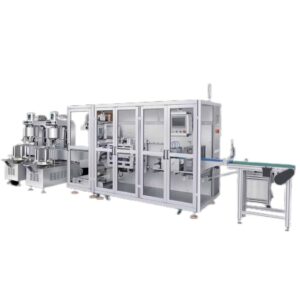
A horizontal cartoner pushes your product sideways into an erected carton. Beyond that shared principle, the first fork in every purchase is motion: intermittent machines stop the carton chain at each station (erect, load, close), while continuous machines keep everything moving and load on the fly. Intermittent tops out around 100-150 cartons per minute at a lower price with easier access; continuous reaches 200-400+ for long single-product runs at roughly double the capital and tighter skills. Choosing between them is mostly a question of how many SKUs you run and how long your runs are.
Punti chiave:
- Intermittent = stop-and-index. Simpler mechanics, wide access for jams and format changes, ceiling around 100-150 cartons per minute.
- Continuous = load on the fly. Product is inserted into moving cartons by synchronized pushers or pickers; 200-400+ cartons per minute at higher cost.
- Run length decides. Few long runs justify continuous; many SKUs and frequent changeovers reward intermittent, because stopped-machine access beats brochure speed.
- Loading method matters as much as motion. Pusher, bucket infeed, or robotic pick each change what products run well.
- Continuous machines hide problems at speed. A mis-collation that stops an intermittent machine becomes a jam or a bad carton in a continuous one, so upstream feeding quality must be better.
- Prezzi indicativi: intermittent horizontal cartoners run roughly $30,000-$100,000; continuous models $100,000-$250,000+.
For how cartoners work overall (erecting, blank magazines, tuck vs glue closing, and the horizontal vs vertical choice), read our cartoning machines explained guide first; this article goes deep on the motion fork only.
What Motion Type Actually Changes
In every horizontal cartoner, a chain of clamps carries erected cartons through stations. The difference is whether that chain ever stops.
Intermittent motion. The chain indexes: it advances one pitch, stops, and during the stop the loader pushes product into the open carton, then the chain advances again. Every station does its work on a stationary target. The stop is the design’s whole character: mechanics are simple (a mechanical indexer or servo with a dwell profile), every station is reachable when stopped, and jams, misfeeds, and format changes are handled by people standing inside the machine’s working zone with the line at zero energy.
Continuous motion. The chain never stops. Cartons pass the loading station at constant speed, and the loading mechanism accelerates alongside, inserts the product mid-flight, and retracts. That synchronization (typically servo-driven flighted infeeds or rotary pickers matching chain speed) is where the engineering, and the money, live. Closing works the same way: tuck fins and folders engage moving flaps, and hot-melt guns fire at moving seams.
| Fattore | Intermittent | Continuous |
|---|---|---|
| Typical speed range | 30-150 cartons/min | 150-400+ cartons/min |
| Mechanics | Indexer or servo dwell | Servo sync, flying loading |
| Access for jams | Excellent (machine stops naturally) | Guarded, fast-moving zones |
| Format changeover | Easier, more manual access | Recipe-driven, still faster in skilled hands |
| Upstream tolerance | Forgiving of misfeeds | Demands consistent infeed |
| Fascia di prezzo indicativa | $30,000-$100,000 | $100,000-$250,000+ |
| Best fit | Multi-SKU, frequent changeover | Long runs, one or few products |
Tutti i prezzi riportati in questa guida sono stime indicative ai fini della definizione del budget, basate sull'osservazione del mercato. Si consiglia di verificare i prezzi attuali con i fornitori per la propria configurazione specifica.
Loading Methods: The Second Decision
Motion type sets the speed ceiling; loading method sets what products you can actually run.
- Pusher (ram). A straightforward pusher shoves the collated product into the carton. The classic for bars, sachet stacks, and any self-supporting group. Cheapest and most robust option on both motion types.
- Bucket infeed (flighted conveyor). Product drops into moving buckets that align with the carton chain. Buckets catch awkward items (pouches, bottles on their side) and carry them gently; they add cost and their own format parts.
- Pick-and-place. A delta robot or overhead picker lifts products into cartons. For delicate, orientation-critical, or mixed items (a tube plus a leaflet plus a spoon), and the only practical loader for some pharma and premium food kits. Highest flexibility, highest price, lowest ceiling per head.
On continuous machines these loaders must also fly: bucket conveyors run at chain speed, and pickers track and release in motion. That is a solved problem, but it is the problem you are paying extra for.
What Runs Well on Each Machine
Choose intermittent when your week looks like this: 3-15 SKUs, runs of minutes to a few hours, frequent size changes, operators who service their own machines. Bakery multipacks, small appliance accessories, pharma clinical and mid-volume lines, contract packing. The ability to open the machine and clear a jam in seconds, with full visual access, is worth more than any speed figure.
Choose continuous when your week looks like this: one to three SKUs, runs of hours or days, and a volume target an intermittent machine cannot physically reach. Cereal inner bags into cartons, confectionery multipacks, beverage can multipacks, high-volume pharma. These lines pair the cartoner with dedicated upstream (a bagger or flow wrapper feeding collation), and that feeding precision is a precondition, not an option.
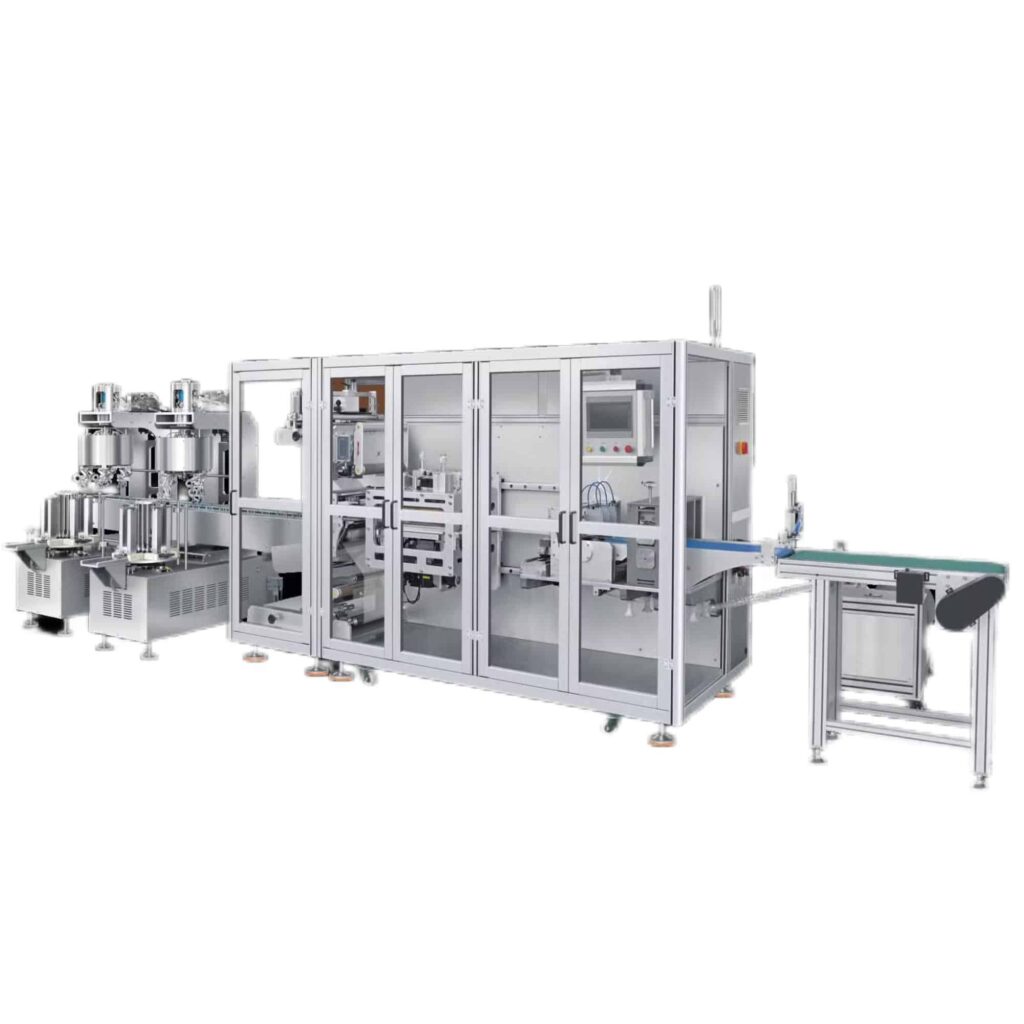
The upstream point deserves emphasis. A continuous cartoner at 300 cartons per minute consumes collated product at 300 groups per minute, non-stop. The wrapper or bagger feeding it needs comparable speed and stable handoff. The photo below shows the typical upstream partner: a flow wrapping machine producing the wrapped primary packs that cartoners later collate.
Speed, Changeover, and the Skills You Actually Need
Rated vs sustainable speed. Brochure speeds are mechanical maxima with perfect product. Budget at 80-85% of rated for continuous lines and 70-80% for intermittent with changeovers, then verify the number against your own collation quality during the factory test.
Changeover on each type. Intermittent machines change formats by swapping guide rails, pusher heads, and chain pitch parts, with hands-on access throughout; 20-40 minutes is typical for a practiced crew. Continuous machines lean on servo recipes that recall speeds and positions in minutes, but the parts that still swap (carton chain sections, flight bars, tucker tooling) demand a disciplined changeover routine, and mistakes at 250 cartons per minute are expensive.
Skills. Intermittent machines reward good general mechanics. Continuous machines need at least one person who understands servo synchronization, can read a motion trace, and is comfortable tuning flying-load timing. Plants without that person either train before commissioning or budget service contracts.
Downstream sync. Whatever you choose, the carton stream feeds case packing and sealing; the tape and hot-melt options after the cartoner are covered in our carton sealing machine guide.
Blank Handling at Speed
The carton blank behaves differently at 250 per minute than at 60. At intermittent speeds, a magazine picker pulls the top blank reliably and static is a footnote. At continuous rates, three blank behaviors start defining your uptime:
- Static charge makes blanks cling together, so pickers pull doubles. Anti-static bars at the magazine and ionizing blowers are standard fittings on continuous machines; confirm they are included rather than optional.
- Humidity warp changes blank geometry week by week. A blank that sat in a humid warehouse erects crooked, and a crooked carton jams the chain at whatever station it reaches first. Climate-controlled blank storage pays for itself in uptime at continuous speeds.
- Score quality under acceleration. Continuous erection snaps blanks open faster; weak or misaligned scores crack or flex crooked. Insist on machine-quality blanks (correct grain direction, controlled scoring) from your converter, and test each lot change during the first weeks of production.
These are upstream disciplines rather than machine features, which is why they surprise first-time continuous-motion buyers: the machine is fine, the consumables around it were never specified for the speed. Put blank specification into your purchasing documents with the same seriousness as the machine order.
Five Buying Checks Before You Sign
- Ask for the cycle diagram. Serious suppliers show the motion profile (dwell times, acceleration curves) and where your product’s critical dimension fits the envelope.
- Test with your worst product, not your best. The mis-shapen pouch, the lightest bar, the flattest sachet stack: run them at the factory acceptance test at full target speed.
- Count the format parts. Every carton size you run now or plan needs its change kit. Price them into the machine order; buying them later costs more and stops the line.
- Confirm the infeed interface contract. Who supplies the collation conveyor, who tunes it, and who owns the handoff timing? Integration responsibility gaps surface on your floor, not the supplier’s.
- Check jam clearance ergonomics. On continuous machines, ask specifically how an operator clears a jam at the loading zone: which guards open, what stops, and how long it takes. If the answer involves tools, budget the downtime honestly.
Domande frequenti
Can an intermittent cartoner reach 150 cartons per minute?
Top-tier intermittent machines touch that range with light products and good feeding, but sustained operation there is working the design at its edge. If 150 is your steady target rather than your peak, the continuous tier is usually the more reliable buy.
Can I convert an intermittent machine to continuous later?
No. The frame, drive, and loading architecture differ from the ground up. Buy the motion type your three-year volume plan justifies; upgrading means replacing the machine.
Which closing works better at continuous speed?
Hot-melt glue closing suits continuous motion well (guns fire at moving seams, and glue sets fast in flight), while tuck closing on continuous machines needs precision tucker tooling and runs somewhat slower. Intermittent machines do both comfortably. Many machines switch between tuck and glue with kits.
How much floor space does a horizontal cartoner need?
Plan 4-6 meters of line length including infeed collation and discharge for intermittent, more for continuous lines with bucket conveyors. Add 1 meter of access on both sides for format work; machines placed against walls get serviced badly, and both motion types are serviced from the sides.
What should the factory acceptance test include?
Run your own cartons and your own product at full target speed for an agreed duration (an hour is a reasonable minimum), with your worst-case blanks in the magazine for part of it. Log the jam count, the seal or tuck quality, and the actual sustained rate. Acceptance on your materials, not the supplier’s demonstration stock, is the difference between a commissioning month and a commissioning quarter.
Do continuous cartoners need servo everything?
Modern ones effectively yes: chain drive, loading sync, and closing stations all servo. That is part of the price step, and it is also why they recipe-change formats quickly and log diagnostics an intermittent machine never captures.
My product is a soft pouch; horizontal or vertical cartoning?
A pouch that holds a squared, collated shape runs horizontally with bucket infeed; a loose, settling pouch runs vertically with gravity drop. The full decision logic is in our horizontal vs vertical cartoning overview. For a recommendation against your pouch format and rate, contattaci with your bag dimensions and target output.